Selected work / Product engineering
Configurable ERP & CRM Platform
A modular software foundation engineered by Deafor for configuring, licensing and deploying tailored ERP and CRM products across different client environments.
The product challenge
One foundation. Different businesses, processes and deployment needs.
A fixed application cannot reflect the operating model of every organization. The platform needed to support client-specific processes, modules, roles and integrations while retaining a maintainable shared product core.
What Deafor engineered
A reusable product architecture beyond a single implementation.
Deafor developed the shared engineering foundation behind configurable ERP and CRM products: modular business capabilities, client-specific configuration, controlled deployments and a licensing layer that validates each delivered installation.
- 01Modular ERP and CRM product architecture
- 02Client-specific process and module configuration
- 03Role-based access foundations
- 04Integration-ready service boundaries
- 05Self-hosted and private-cloud deployment model
- 06Central license server and installation validation
- 07Term and perpetual licensing support
- 08Versioning, updates and operational continuity
Platform architecture
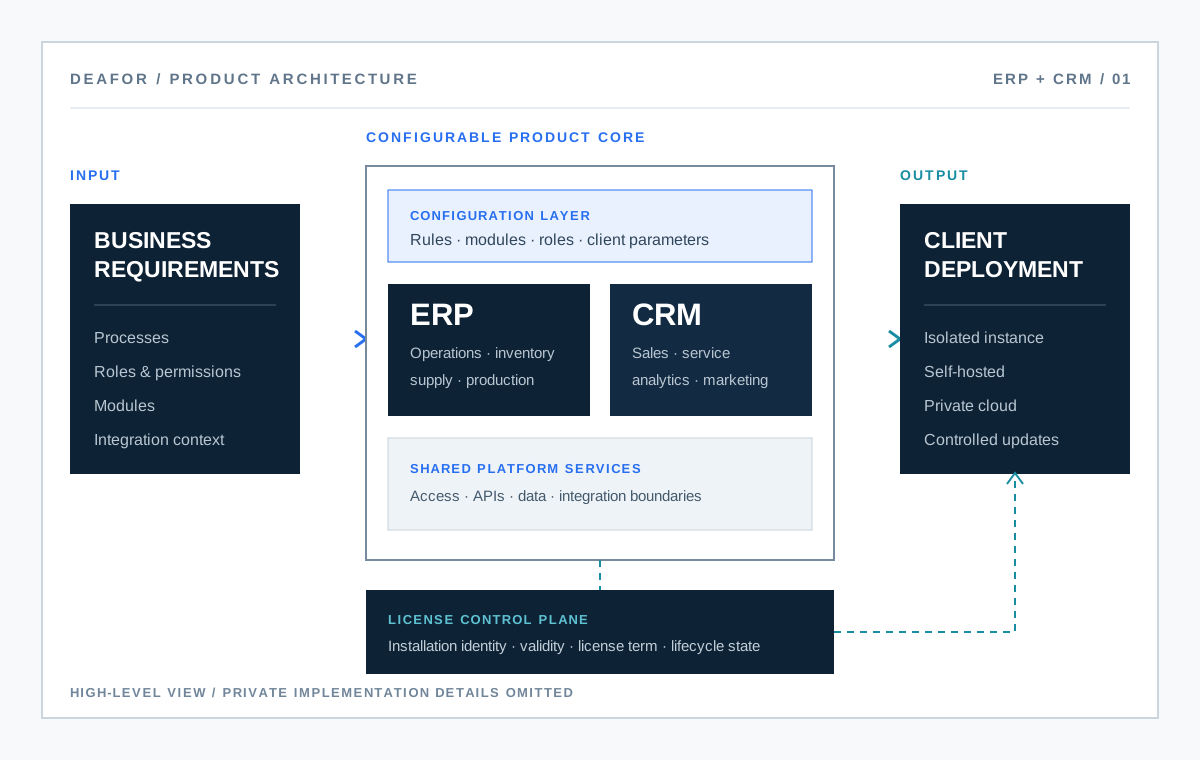
From business requirements to a controlled client deployment.
The architecture separates reusable product engineering from each commercial configuration. Private code, customer configurations and security-sensitive license validation details are intentionally not shown.
Commercial model
Clear responsibilities across engineering and product delivery.
Deafor is the software engineering company responsible for the platform and its technical evolution. DMG Web operates the commercial product model: it configures the solution for the customer and provides it under a term or perpetual license. This case study presents Deafor’s engineering contribution, not DMG Web as a separate external client engagement.
Engineering breadth
A foundation for multiple business products and implementations.
The project demonstrates product architecture, enterprise workflow modelling, secure licensing, systems integration and deployment ownership within one coherent platform—while allowing individual client solutions to evolve without fragmenting the core product.